Drawing to Storybook Page
AI photo template · from a drawing
Their character as the hero of a picture-book page.
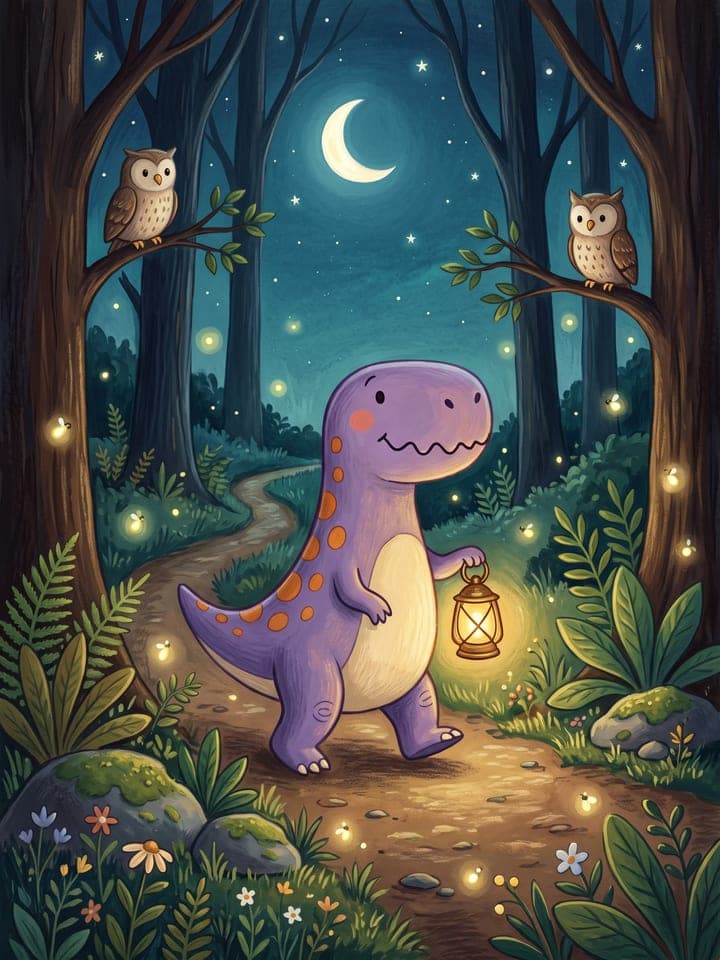
Example result. Yours is made from your own photo.
A picture-book page with your kid's character as the hero: soft painted illustration, a small adventure scene around it, and the same colors, shapes and quirks as the original drawing. There is no text on the page, so you can tell the story out loud.
1 photo
per result
Shapes: 9:16 · 3:4 · 4:5 · 1:1 · 4:3 · 16:9. Example shown in 3:4. How photos are counted
How to make a storybook illustration from a kid's drawing with AI
To turn kids drawings into art that looks like a page from a picture book, upload one photo of the drawing to Drawing to Storybook Page: 1 photo per page on any plan, 3 free photos for new accounts. The character comes back as the hero of a soft gouache and colored-pencil illustration, busy with a small, cozy adventure, and keeps the shapes, colors and odd proportions your kid gave it. The page has no text.
- Hold the phone parallel to the paper and take the picture straight on, so the angle doesn't stretch or squash the character before it is painted.
- Put that photo in The drawing slot; a page costs 1 photo. The painting style is always the same, and the template picks the scene itself.
- Open the page in My creations. For a second page, run the same drawing again: every run paints a new scene around the same character.
What ends up on the page?
One finished painting, edge to edge, in a warm bedtime-book style. The character stands in the foreground doing something in a scene that suits it: a moonlit forest, a paper boat on a pond, a friendly village or rooftops at dusk are the kinds of adventures the template is written for. The mood stays gentle, so even a monster with teeth looks like the friendly lead of the book.
The template is written to keep the paper out: crayon strokes, scribbled ground and smudges should come back repainted as part of the scene. If a strip of raw crayon or blank paper still shows, as in the monster's first run below, run the drawing again. Words, speech bubbles and page numbers are left out, which leaves the story to whoever reads it aloud.
What can you use it for?
- A bedtime story your kid tells out loud, with their own character on the page.
- A few pages from one drawing, printed and bound as a small book for grandparents.
- A framed print for the kid's room, hung next to the original drawing.
- The front of a thank-you card your kid signs inside.
What does an example run look like?
- AI-generated sample input
 Result
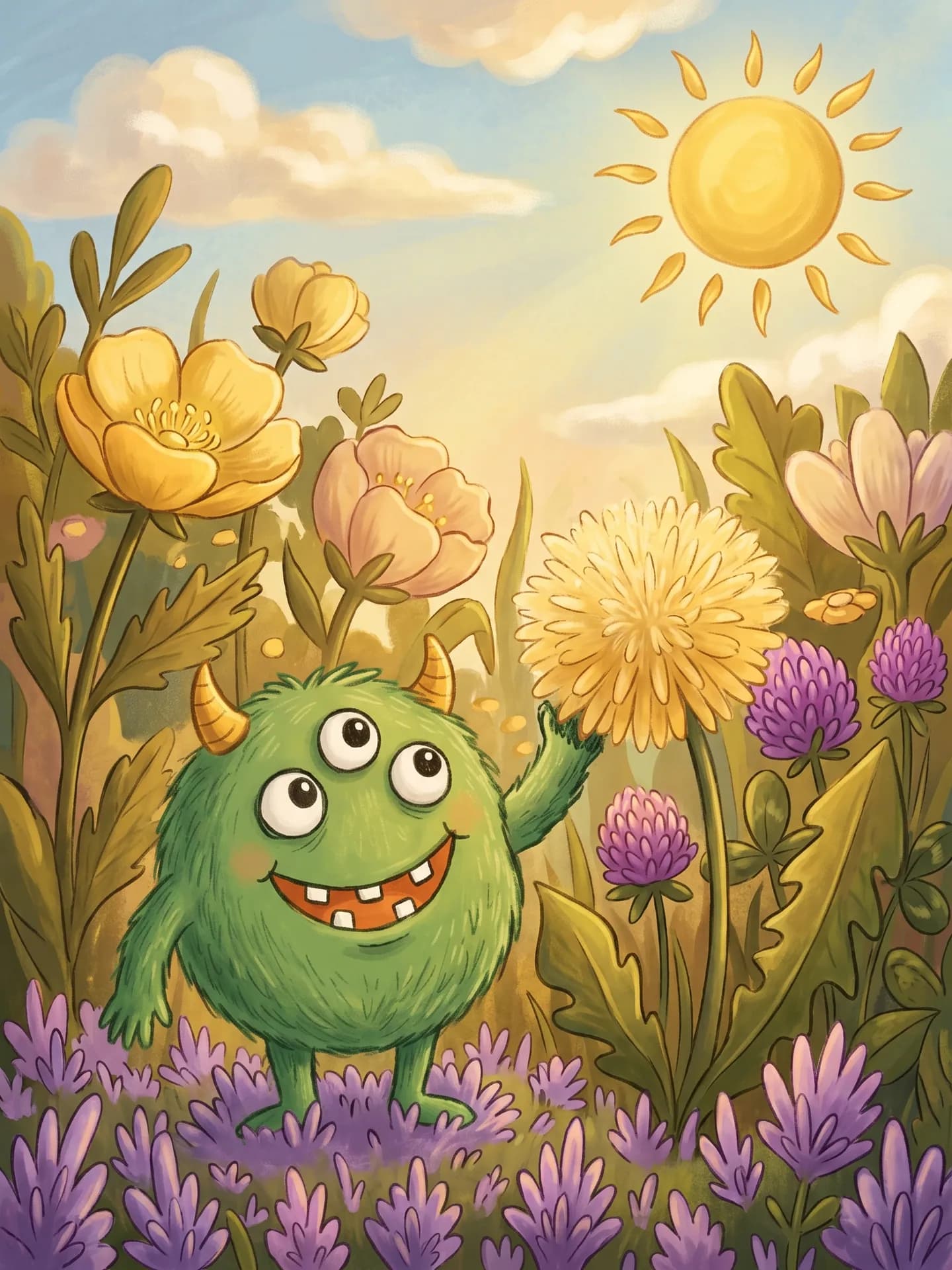
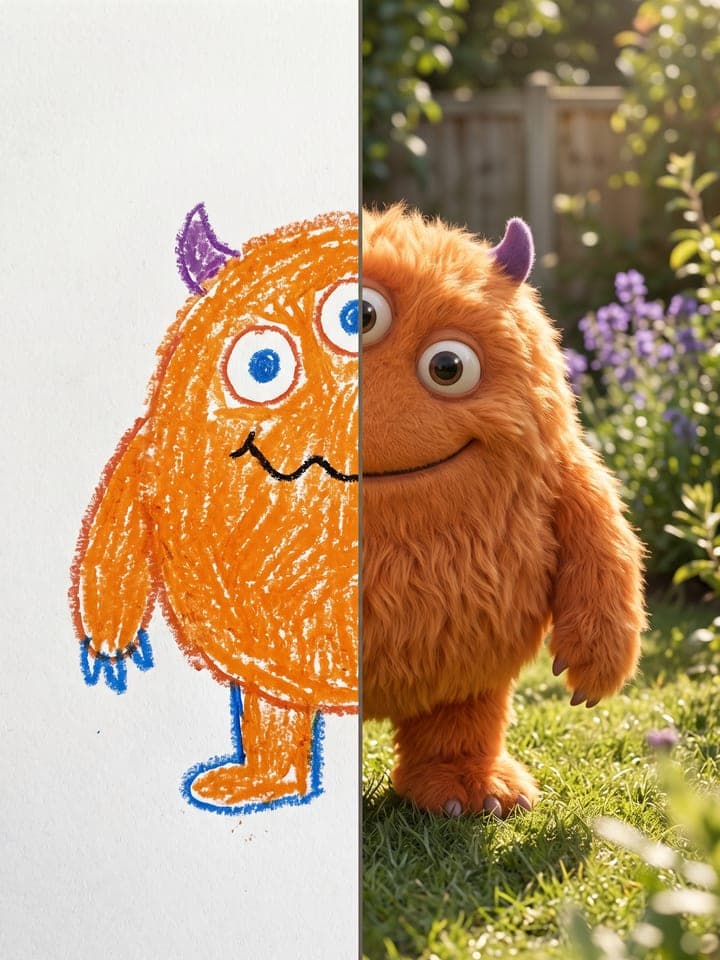
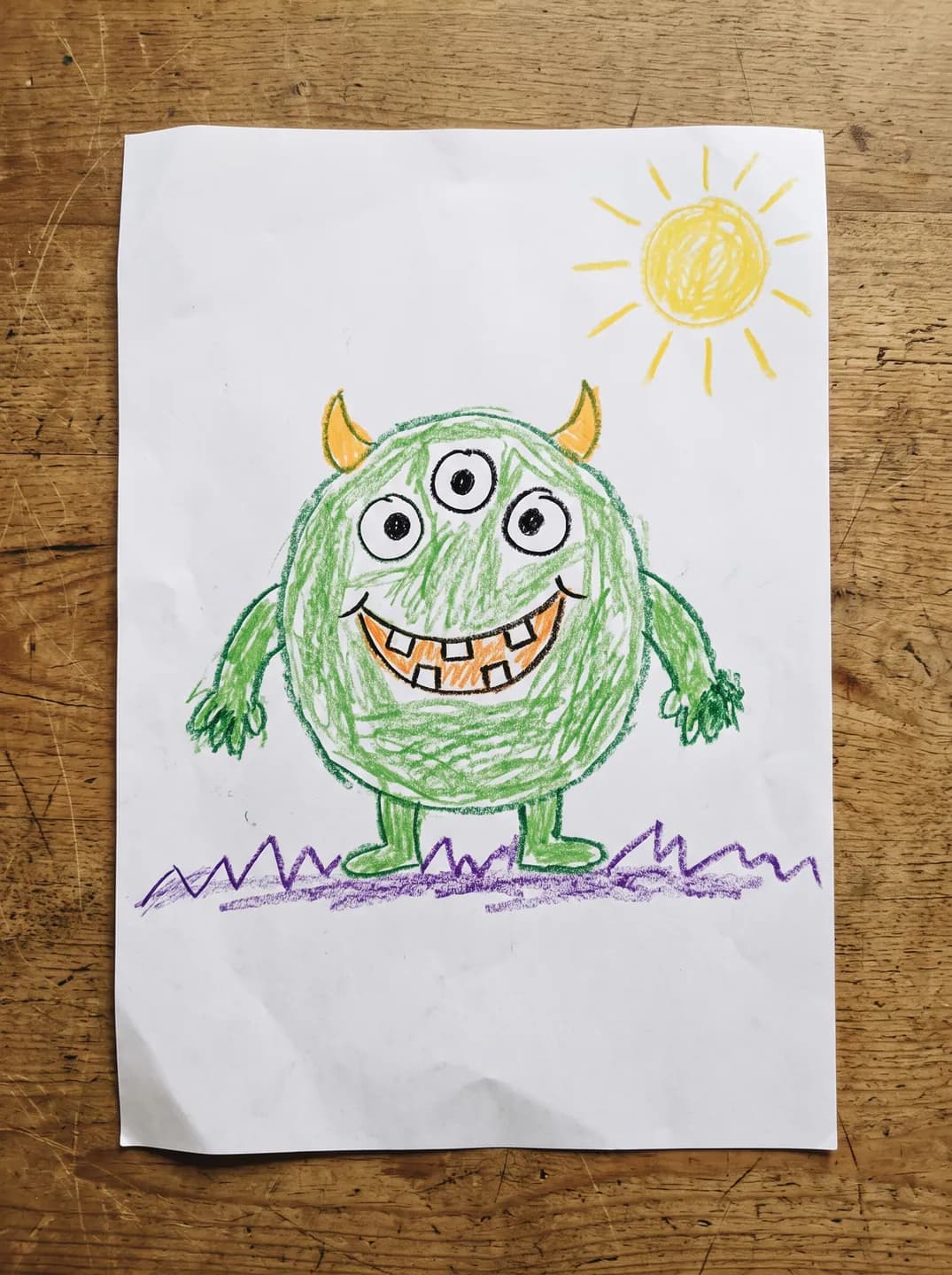
Crayon monster, 2nd run: three eyes, two horns and the toothy grin kept; the purple zigzag grass became purple flowers. The 1st run left raw crayon on blank paper along the bottom. - AI-generated sample input
 Result
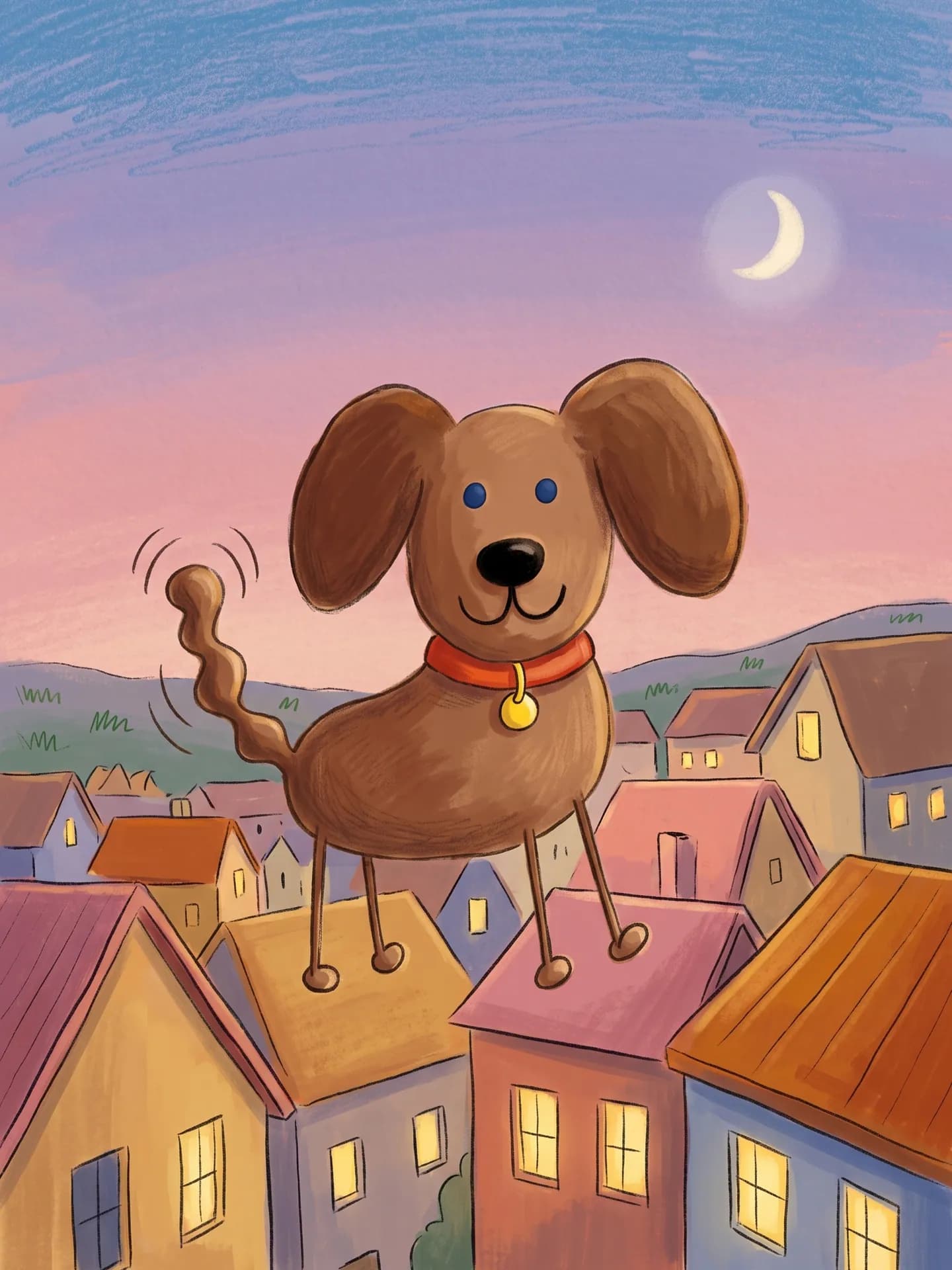
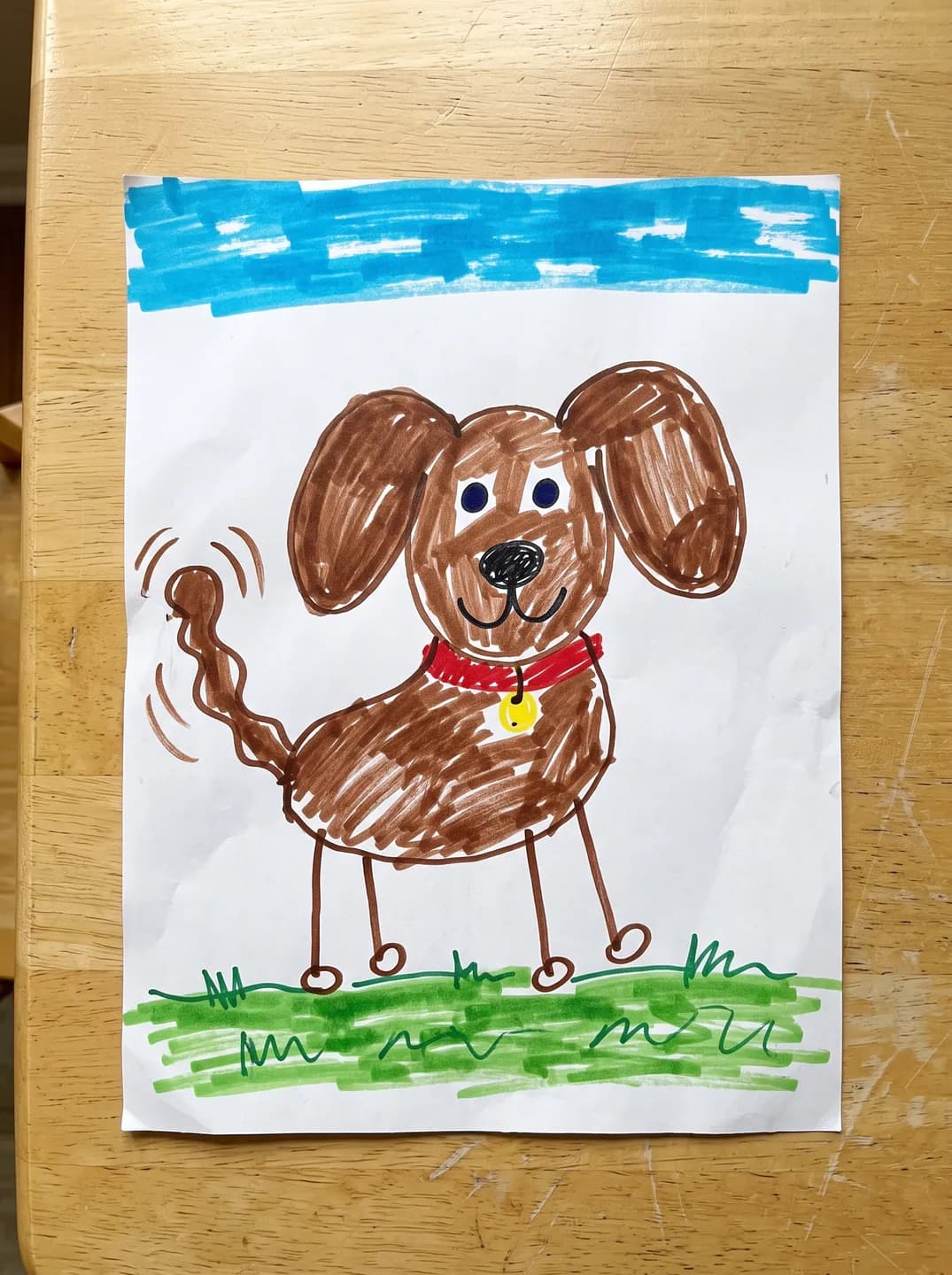
Marker dog, 1st run: floppy ears, blue eyes, the red collar with its yellow tag and the stick legs kept. The wag marks stayed as painted lines by the tail.
How do I get a better result?
- Choose the drawing with the most character rather than the neatest one. Uneven eyes, extra arms and surprising colors are painted as they are, and they are what makes the page clearly your kid's.
- Things drawn around the character can come back in the scene, as the monster's grass and sun did above. Keep a drawn background in the photo if you like it, or crop it away.
- Crop to one character when the sheet is crowded. The page has a single hero in the foreground, so a second figure may be dropped or folded into the background.
- Planning a printed book? Make every page from the same photo of the drawing, so each run starts from an identical source.
What goes wrong most often?
- Expecting the story text on the page. Add words in a layout app, or print with a wide margin and write underneath by hand.
- Waiting for a scene menu. There is no setting for where the adventure happens; run the drawing again for a different one.
- Using it to see the character in a real-looking photo. That is Kid's Drawing Comes Alive, which makes a photo instead of a painting.
Guide: Turn Your Kid's Drawing Into Real Life: 4 Keepsakes From One Doodle
What you need
The drawing
Shoot it flat from above in daylight, the whole sheet in frame, no shadows.
Works well
- The whole sheet, shot flat from straight above
- Daylight with no shadows across the paper
Avoid
- Angled shots that bend the lines
- Cropping into the drawing